Why Your Garage is a Thief’s Treasure Map

So, a neighbor’s garage got broken into, and it’s got everyone on the street a little jumpy. It’s a terrible feeling, because your garage should be your sanctuary and workshop—not an easy-access shopping mall for some jerk.
Let’s make sure your garage is a fortress of solitude, not a free-for-all. It’s actually easier and more affordable to secure than you might think.
First, let’s be honest about what’s in there, because it’s not just a place to park the car. Garages are treasure troves, and thieves know it. According to multiple home security sources, they’re hunting for high-value, easy-to-grab items.
Your collection of power tools, lawn equipment, and expensive bicycles are all prime targets. So are sporting goods like golf clubs and camping gear.
Even your vehicles, from the family SUV to a classic project car, are at risk.
Securing your garage isn’t just about protecting your stuff; it’s about protecting your family.
Think Like a Burglar: What Are Your Garage’s Weak Spots?

Think of your garage like a castle. Every door and window is a potential entry point for invaders.
Once you start looking at your garage through the eyes of a thief, the weak spots become obvious. According to garage security guides, the primary targets are predictable and easy to find.
The main garage door is the most obvious point of attack. Its size and mechanical nature present unique vulnerabilities.
Your side “man” door is another common target, especially if it’s out of sight from the street.
Any windows, whether in the walls or on the garage door itself, are basically a “peek inside” invitation for a thief to scope out your valuables before they strike.
And most critically, the door leading from your garage directly into your home must be as secure as your front door, if not more so. We’ll go through and button up each one of these weak spots.
Your Smart & Simple Garage Security Game Plan

Don’t worry, this isn’t going to involve moats or guard towers. We’re talking about smart, simple fixes that address the most common ways thieves try to get in.
Our plan involves a layered approach. We’ll physically reinforce the doors and windows to make entry difficult and time-consuming.
Next, we’ll add modern tech like lights and cameras to act as powerful deterrents that send thieves looking for an easier target.
Finally, we’ll cover simple but effective security habits that cost nothing but make a huge difference.
By tackling these areas, you create a comprehensive defense that turns your garage from a soft target into a secure part of your home.
How Strong Is Your Main Garage Door?
Your main garage door is the largest moving part of your home and the front line of your garage’s defense. Its strength starts with what it’s made of, and as security experts note, not all materials are created equal.
Give your current door a good once-over. Do you see any cracks, damage, or weak spots? A determined thief can exploit any pre-existing damage, so patching those up is a crucial first step.
Vinyl Doors: These are often the lightest and most affordable option, but they are also the easiest to damage or cut through. For security, vinyl is not the ideal choice.
Steel Doors: A tough, solid choice that provides excellent security for a reasonable price. Most modern insulated steel doors offer a great balance of durability, security, and value.
Wood Doors: Beautiful and very secure, wood doors are a fantastic-looking and formidable barrier. However, they come at a higher price point and require more maintenance to keep them in top shape.
Upgrade Your Opener: Ditch the 90s Security Risk

If your garage door opener is old enough to have “dip switches”—a small row of on/off switches used to set the code—you have a major security vulnerability.
This older technology has a limited number of possible codes. A tech-savvy thief can use a simple “code grabber” device to try every combination in minutes, a technique known as a “brute force attack.”
As experts point out, this method is surprisingly effective against outdated systems.
The fix is to upgrade to a modern opener that uses “rolling codes.” This technology is a huge leap forward for garage security.
A rolling code system changes the security code every single time you use the remote. Because the code is never the same twice, a thief can’t capture it or guess it. Problem solved.
Thwart the Coat Hanger Trick: A Simple, Crucial Fix

You’ve seen it in movies: a thief slips a coat hanger through a gap at the top of the garage door, hooks the emergency release cord, and slides the door open manually. This isn’t just movie magic; it’s a real technique known as the “6-second break-in.”
If a criminal can create a small gap at the top of the door, they can see that little red cord and know exactly what to do.
Luckily, the fix is incredibly simple and almost free. Grab a standard zip tie and use it to secure the emergency release lever to the opener’s trolley or bracket.
This prevents the lever from being pulled down by a hook from the outside. If you need to use the emergency release yourself during a power outage, you can simply cut the zip tie with scissors or a knife.
Another great option is a garage door shield, a simple plastic or metal plate that bolts onto the opener bracket and physically blocks access to the release lever.
For Maximum Security, Add a Garage Door Deadbolt
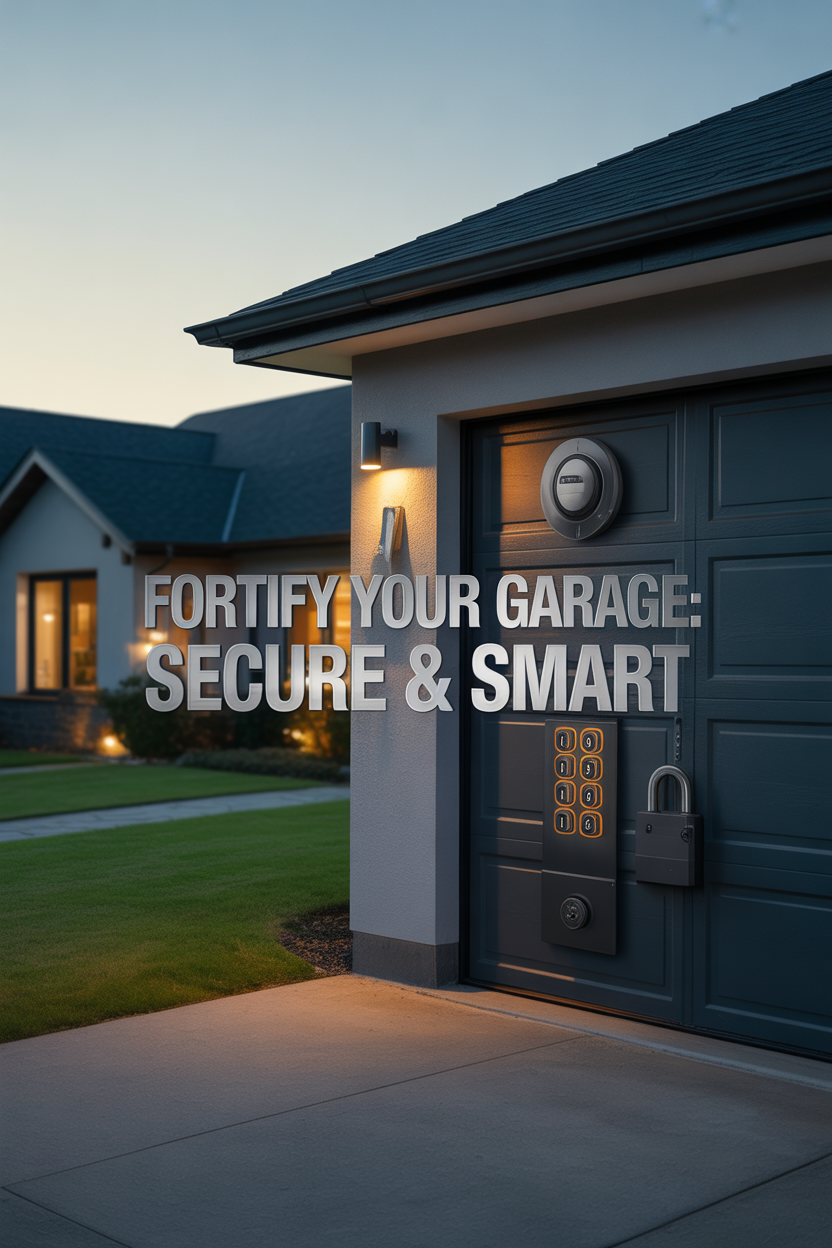
For maximum physical security, add a heavy-duty deadbolt to your garage door. This is a powerful, low-tech solution that adds a formidable layer of protection.
A garage door deadbolt is a manually operated lock that slides a solid steel bolt through a hole in the garage door track, physically preventing the door from being lifted.
This type of lock only works from the inside, making it perfect for when you’re away on vacation or for extended periods. It’s a simple DIY project that usually just requires drilling a hole through the track.
Crucially, you must disengage your automatic opener before engaging the deadbolt. Attempting to open the door with the remote while the bolt is engaged can severely damage your opener or the door itself.
Don’t Forget Your Side and Entry Doors

While the main garage door gets most of the attention, thieves often target the less conspicuous side “man” door. These doors are often out of sight and may have weaker locks than your home’s front door.
Inspect your side door. Is it a hollow-core door? Replace it with a solid-core or steel door for significantly more kick-in resistance.
Upgrade the lock to a high-quality deadbolt with at least a 1-inch throw. Also, replace the short screws in the strike plate with 3-inch screws that anchor it firmly to the wall stud, not just the flimsy door jamb.
Most importantly, apply these same principles to the door leading from your garage into your home. This is the final barrier protecting your family.
Treat this entry point with the same seriousness as your front door. It should be a solid-core door with a quality deadbolt, ensuring that even if your outer garage is breached, your home remains secure.
Blackout the Buffet: Secure Your Garage Windows
A bare garage window is like a menu for a burglar, allowing them to see all the valuable “dishes” you have on display. Let’s close the restaurant for good.
First, ensure every window has a functioning lock. The flimsy factory latches are often not enough, so consider adding simple keyed locks or pin locks for extra security.
For a tougher barrier, apply a security film to the glass. This clear adhesive sheet holds the glass together even if it’s shattered, making it much harder and noisier for a thief to create an opening.
The simplest fix of all is to block the view. Install curtains, blinds, or apply a frosted or translucent privacy film. If a thief can’t see what’s inside, your garage becomes a much less attractive target.
Finally, consider adding glass-break sensors or window/door sensors as part of a larger home security system. The loud alarm will send most crooks running.
Lights, Camera, Action! Your 24/7 Digital Doorman
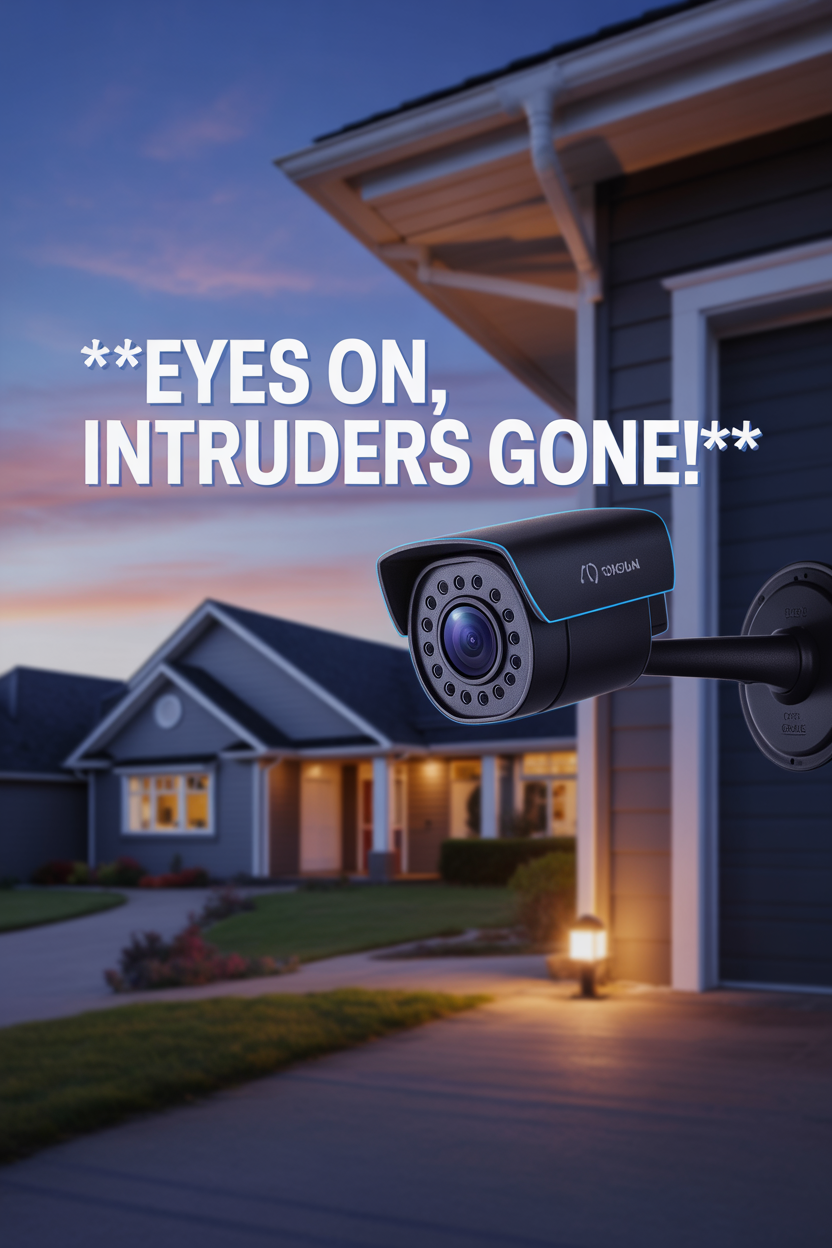
Nothing says “you’re not welcome here” to a thief quite like a bright light suddenly flicking on and a camera lens pointing right at them. Deterrents are a key part of any effective garage security strategy.
Motion-sensor floodlights are fantastic deterrents. They startle intruders and eliminate the cover of darkness, putting them directly in the spotlight.
Modern wireless security cameras are incredibly affordable and easy to install. You can get alerts on your phone the moment motion is detected and see what’s happening in real-time.
Here’s a pro tip for camera placement: Don’t mount them so high that you only get a view of the top of a baseball cap. Place them lower, around 7-8 feet off the ground, to increase the chances of capturing a clear shot of a person’s face.
Aim cameras at your garage door, side doors, and any vulnerable windows. It’s also a great idea to place one inside the garage, pointed at the entry door to your house.
Smart Habits Cost Nothing but Make a Big Difference
Some of the most effective security measures are simple habits that don’t cost a dime. Integrating these into your daily routine hardens your defense significantly.
First, never leave your garage door remote in a car that’s parked in the driveway. This is the equivalent of leaving your house key on the front porch for anyone to grab.
Keep your garage door closed at all times, even when you’re home or working in the backyard. An open door is an open invitation.
Take a walk around your garage and look for potential hiding spots. Trim back overgrown bushes or shrubs near windows and doors to eliminate places where a thief could conceal themselves.
Finally, get to know your neighbors and look out for each other. A tight-knit community where people notice suspicious activity is a powerful deterrent in itself.
Rest Easy in Your Newly Secured Fortress

Phew. See? Securing your garage isn’t so daunting after all. By taking a weekend to tackle a few of these projects, you can gain tremendous peace of mind.
You’ve reinforced your doors, blocked prying eyes, and added smart deterrents that make your garage a much, much harder target.
You’ve taken back control and made a clear statement to any would-be thief: “Move along, there’s nothing for you here.”
Now your garage can go back to being what it’s supposed to be: your space, filled with your projects and your stuff, securely protected day and night.